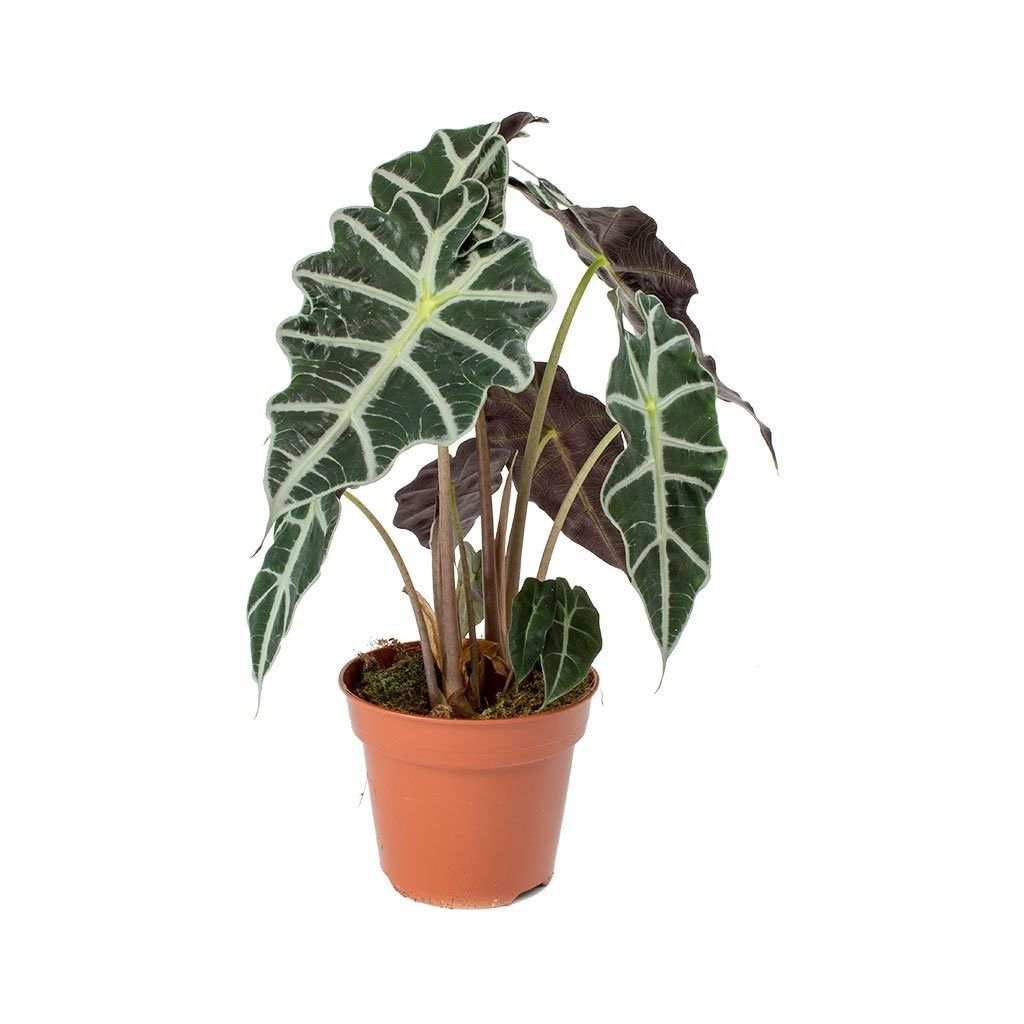

The Alocasia 'Polly', commonly called the African Mask Plant, is a striking statement plant known for its glossy, arrow-shaped leaves marked with dramatic metallic-silver veins and deep purple undersides. Despite its common name, this hybrid plant (Alocasia x amazonica) doesn't actually originate from Africa — the name comes from its leaves' resemblance to traditional African masks, while the Alocasia genus itself is native to tropical Asia and Eastern Australia. This compact, dramatic plant is a Good Mood favorite for tabletops and humid spaces across Bangladesh.
Botanical Specifications
- Botanical Name: Alocasia x amazonica 'Polly'
- Also Known As: African Mask Plant, Amazonian Elephant Ear
- Origin Note: A hybrid cultivar; the Alocasia genus is native to tropical Asia and Eastern Australia — not Africa, despite the common name
- Common Name: Alocasia Polly
Plant Origin & Characteristics
- Growth Pattern: Upright with dramatic leaf presentation
- Appearance: Dark green, glossy arrow-shaped leaves with metallic silver veins and purple undersides
- Height: 30–50cm — petite but striking
Growth Level & Maintenance
- Skill Level: Intermediate
- Maintenance: Moderate — enjoys consistent humidity and care
- Growth Speed: Moderate
- Lifespan: Long-lived houseplant with proper care
Key Benefits
- Striking Foliage: Dramatic silver-veined leaves that make an instant visual statement
- Compact Size: Perfect for tabletops and shelves despite its bold appearance
- Air-Purifying: Contributes to improved indoor air quality
- Expressive Plant: Leaves droop visibly when thirsty, making watering needs easy to read
- Pet Caution: Toxic if ingested — keep away from pets and children
Ideal Placement
Tabletops, shelves, and humid spaces like bathrooms and kitchens.
Care Guide
Watering: Keep soil consistently moist in summer. In winter, allow the top 3cm to dry between waterings. The leaves will droop noticeably when the plant is thirsty — a helpful watering cue.
Light: Best in bright, indirect light near east-facing windows. Tolerates medium light, though growth slows. Avoid direct sun, which scorches the leaves.
Humidity: Loves high humidity, ideally 60%+. Mist leaves 3 times weekly or use a pebble tray — bathrooms and kitchens are often ideal spots.
Temperature: Maintain 18–28°C. Avoid cold drafts.
Frequently Asked Questions
Is Alocasia Polly safe for pets?
No, it is toxic if ingested and can cause mouth and throat irritation, drooling, and vomiting in pets. Keep it away from cats, dogs, and children.
Why is Alocasia Polly called the "African Mask Plant" if it's not from Africa?
The name comes from the leaves' resemblance to traditional African ceremonial masks, not its geographic origin. The plant is actually a hybrid with Asian and Australian Alocasia parentage.
Why does my Alocasia Polly go dormant or lose leaves in winter?
This is normal — Alocasia often slows down or drops leaves in cooler, lower-light winter months and will typically regrow with warmer temperatures and consistent care.
Order your Alocasia 'Polly' (African Mask Plant) online in Bangladesh from Good Mood — every plant comes with a full care guide, safe packaging, and doorstep delivery in Dhaka.
📊 Botanical Specifications
- Botanical Name: Alocasia 'Polly' (African Mask Plant)
- Origin & Native Region: Tropical Regions
- Common Names: Alocasia 'Polly' (African Mask Plant)
- Category: Air Purifying Plants
🌍 Plant Origin & Characteristics
- Native Habitat: Tropical Regions
- Natural Growing Conditions: Found in subtropical to temperate regions
- Growth Pattern: Upright / Bushy
- Appearance: Lush green foliage
📈 Growth Level & Maintenance
- Skill Level: Beginner-Friendly
- Maintenance: Low-Maintenance
- Growth Speed: Moderate to Fast-Growing
- Lifespan: Long-lived houseplant
✨ Key Benefits & Features
- Air-Purifying: Removes common indoor air pollutants
- Stress Relief: Adds greenery and natural beauty
- Visual Impact: Enhances interior spaces
- Easy Care: Forgiving and resilient
- Pet Consideration: Keep away from pets
💧 Watering
Water the plant when the top layer of soil becomes slightly dry. Avoid keeping the soil continuously waterlogged.
☀️ Light
Keep the plant in bright indirect light. Avoid prolonged exposure to harsh direct sunlight.
🌱 Soil
Use a well-draining potting mix that allows excess water to drain freely and keeps the roots healthy.
🌡️ Temperature & Humidity
Keep the plant in a warm environment with moderate humidity. Protect it from extreme temperatures and cold drafts.
✂️ Pruning & Maintenance
Remove yellow, damaged or dead leaves regularly. Occasional pruning helps maintain a clean and healthy appearance.
🌿 Fertilizing
Feed with a balanced indoor-plant fertilizer during the active growing season according to the fertilizer instructions.